
Guide
How much acoustic treatment does a room need?
A practical guide to how much acoustic treatment a room actually needs — why coverage depends on RT60, room size, and use, and why most rooms need less than people expect.
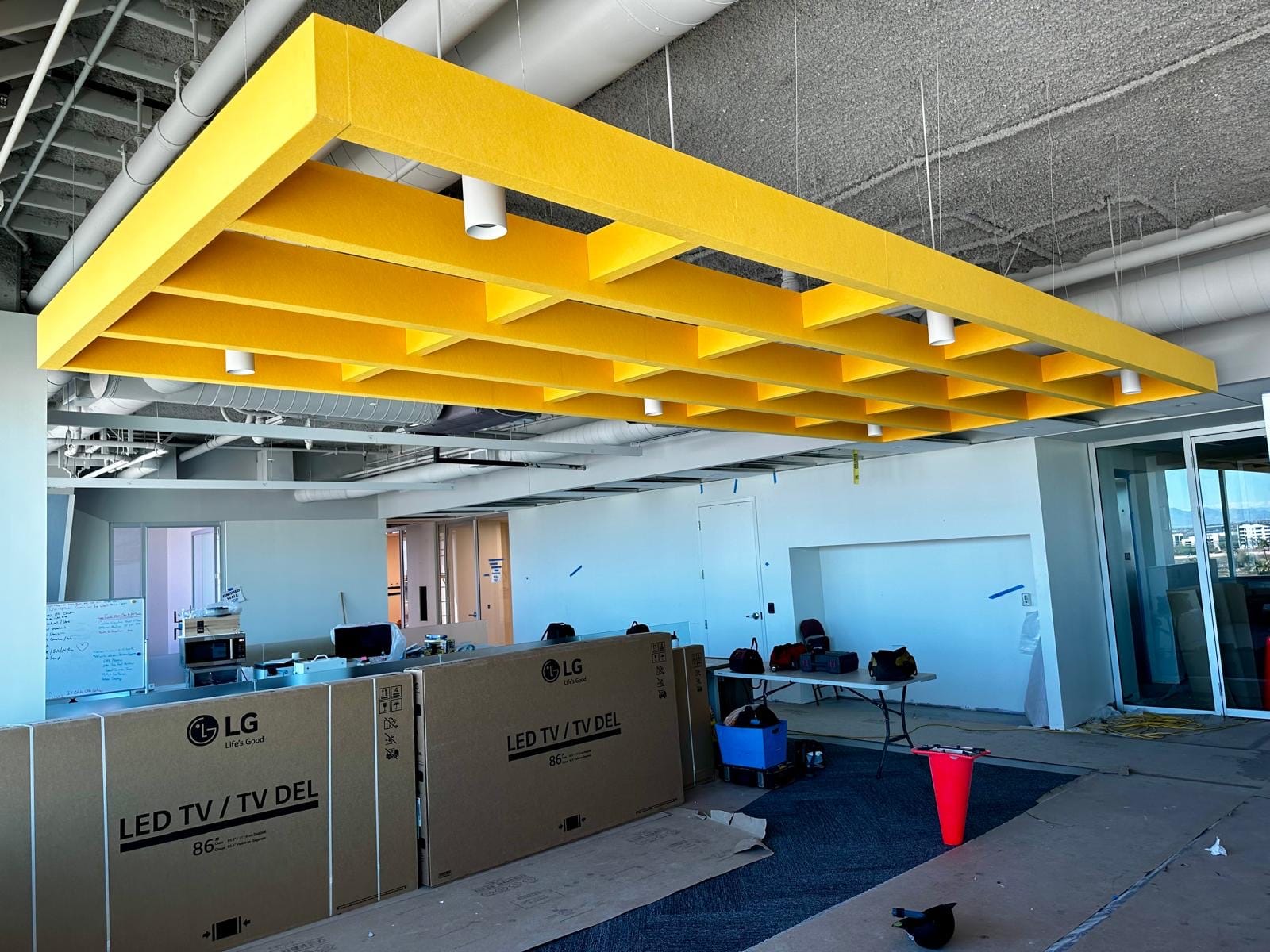
There's no single percentage that fits every room. How much acoustic treatment a space needs depends on its size, its surfaces, and how it's used — a gym, a conference room, and a home theater all have different targets. The goal isn't to cover every wall; it's to bring the room to a comfortable reverberation time (RT60) using the right amount of absorption in the right places.
What actually determines the amount
- Room volume — bigger rooms hold sound longer and need more absorption to hit the same RT60.
- Surfaces — glass, concrete, tile, and drywall reflect; carpet, soft seating, and people already absorb. A room that's already partly soft needs less.
- Use — speech-critical rooms (conference, classroom, worship) target a shorter, clearer decay than a lounge or restaurant.
- Placement — treatment at first-reflection points and on the ceiling does more per panel than the same area scattered randomly.
Why more isn't better
Over-treating a room makes it sound dead and muffled — the opposite of the goal. The target is a comfortable, natural room, not a silent one. That's why we measure RT60 before designing: it tells us how far the room is from its target so we can add exactly enough, not more.
How we decide for your room
For every project we measure the room, calculate the coverage needed to reach a comfortable RT60 for its use, and place treatment where it does the most good. Then we measure again after install so the improvement is documented, not guessed. It's the difference between designing to the room and ordering from a catalog.