
Guide
Snowsound vs traditional acoustic panels
How Snowsound's fabric-tensioned acoustic panels differ from traditional foam and wrapped-fiberglass panels — performance, finish, and where each fits.
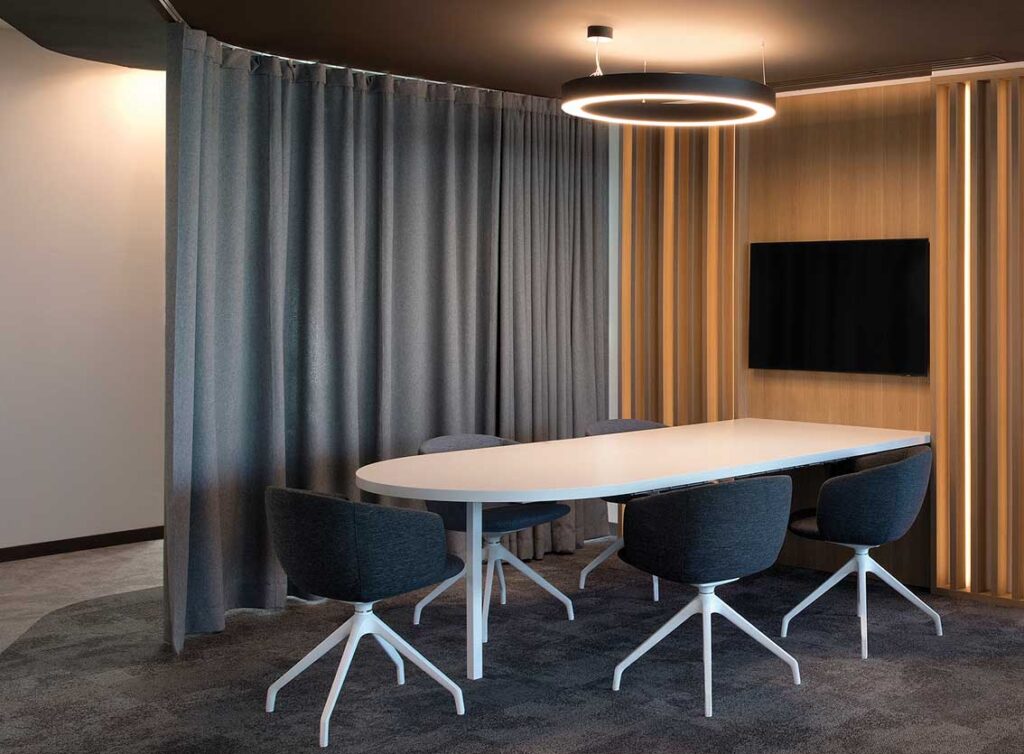
"Acoustic panel" covers a wide range of products, from cheap foam to architectural systems. If you're weighing Snowsound against traditional panels, the differences come down to how they're built, how they perform, and how they look in a finished space.
Traditional acoustic panels
Most conventional panels are either open-cell acoustic foam or a fiberglass/mineral-wool core wrapped in fabric. They work — a wrapped-fiberglass panel absorbs sound well across the speech range — but foam in particular can look utilitarian, collects dust, and can degrade or discolor over time. Wrapped panels are a finish upgrade but are still essentially a soft board on the wall.
How Snowsound is different
- Snowsound panels use a patented tensioned-fabric construction rather than an exposed foam or loose-fill core — a cleaner, more finished look.
- The lines span wall panels, suspended baffles and clouds, dividers, and acoustic textiles, so the same design language covers a whole room.
- Finishes are made to sit inside interior design — brand colors, printed and art-style options, and forms that read as intentional rather than bolted-on.
Which is right for your room?
It depends on the space, the look you're after, and the budget. A back-of-house room may only need a straightforward wrapped panel; a client-facing restaurant or office usually wants a finish that disappears into the design. We're an authorized Arizona dealer and installer for Snowsound and Soelberg MUTO, but we're not tied to one catalog — we specify the product that fits the room, then install it clean.